There is a persistent assumption in private aviation that a jet is always the upgrade. On paper it is easy to see why: higher cruise speed, higher altitude, a badge that photographs well. On the trips our clients actually fly, the arithmetic is rarely that simple.
Speed is not the same as arriving sooner
On a two-hour sector, a light jet's cruise advantage is worth perhaps twenty minutes in the air. That advantage evaporates the moment the jet cannot use the field closest to where you are actually going. A thirty-minute drive from the airport that could take it undoes the whole gain, plus interest.
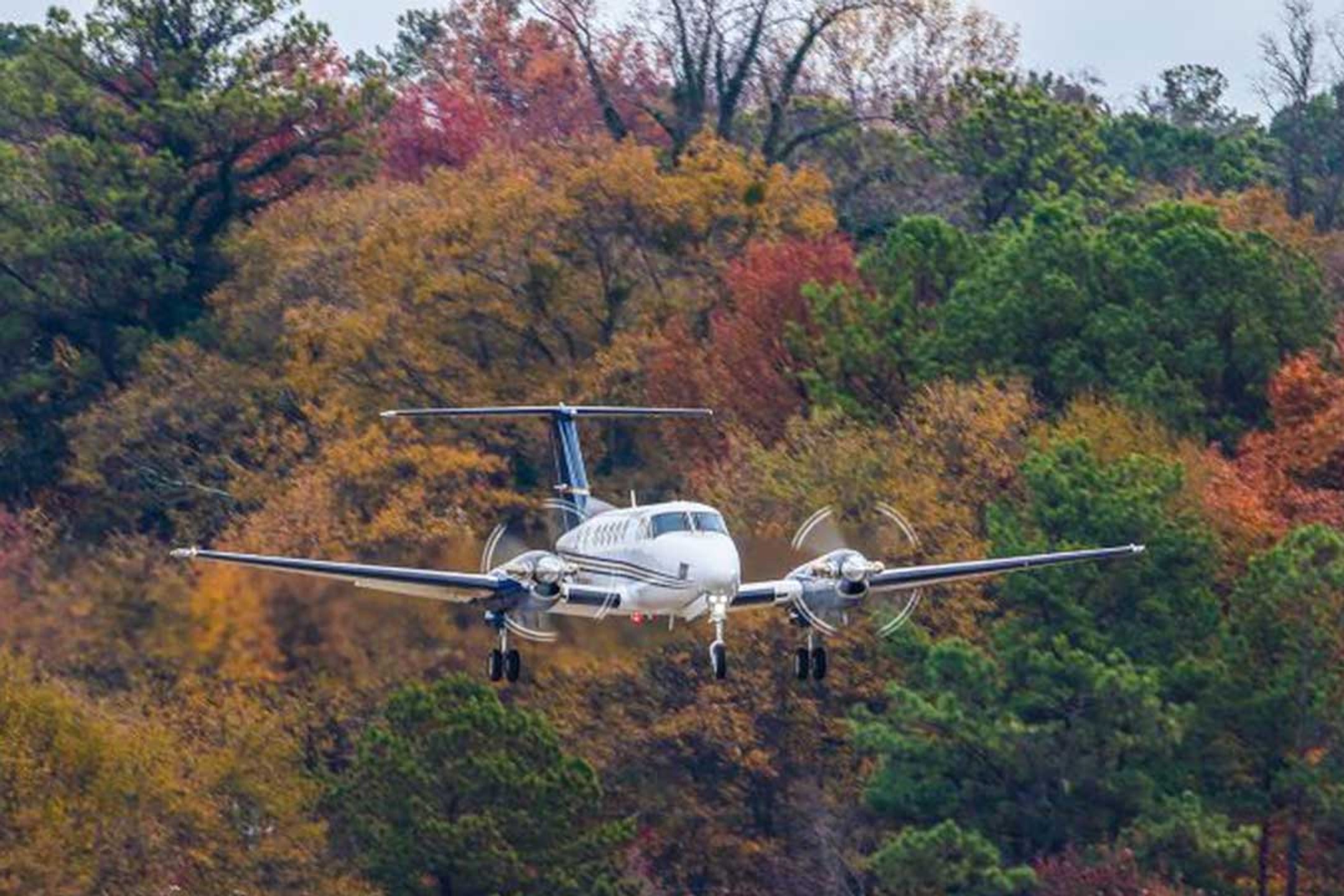
The King Air 350 needs around 3,300 feet of runway. That number is the entire argument. It opens fields that a heavier aircraft simply cannot use, in exactly the places people want to go: mountain towns, coastal strips, links courses and ranches. Arriving nearer beats arriving faster on almost every trip under 800 nautical miles.
Arriving nearer beats arriving faster on almost every trip under 800 nautical miles.
The cabin does not apologize
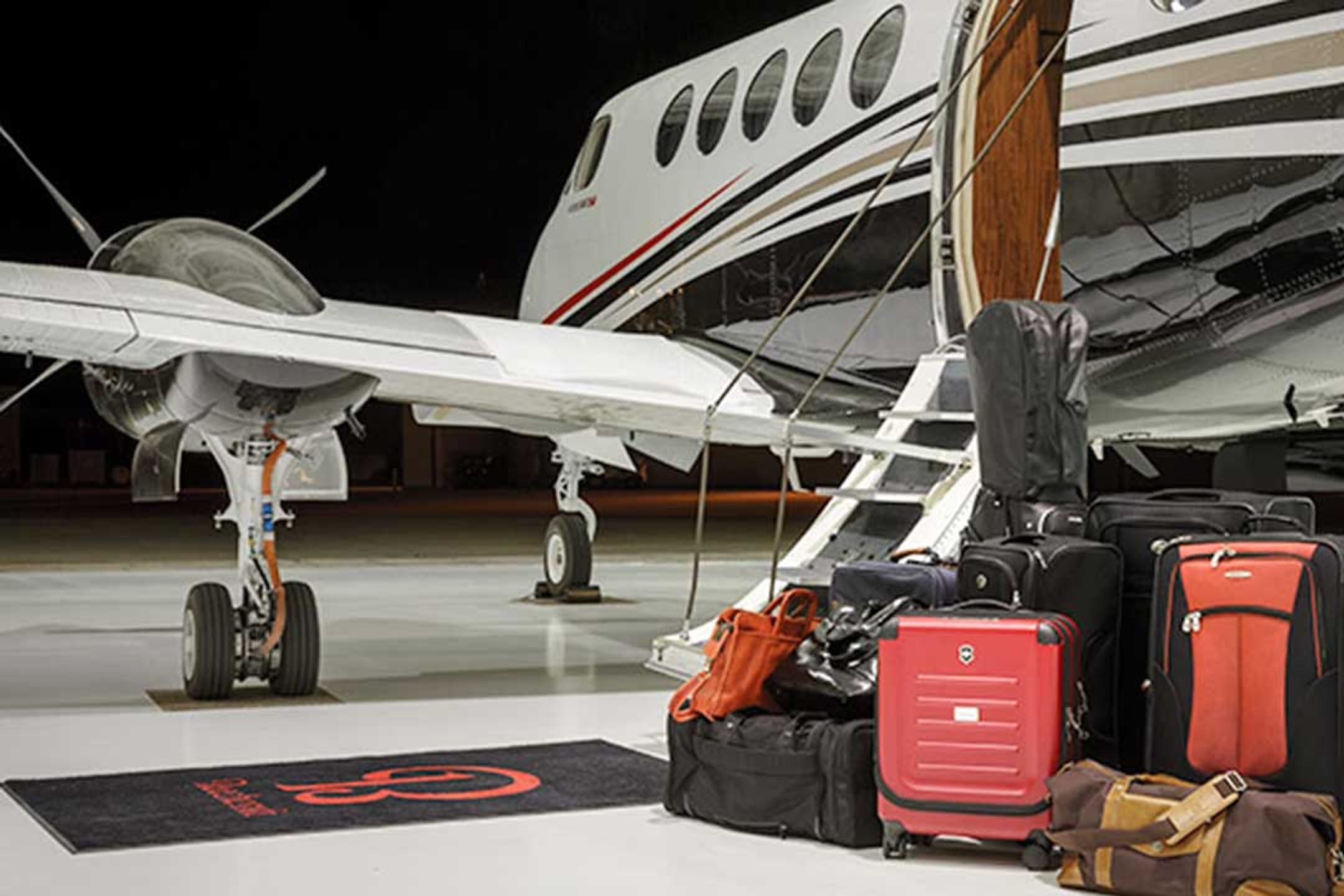
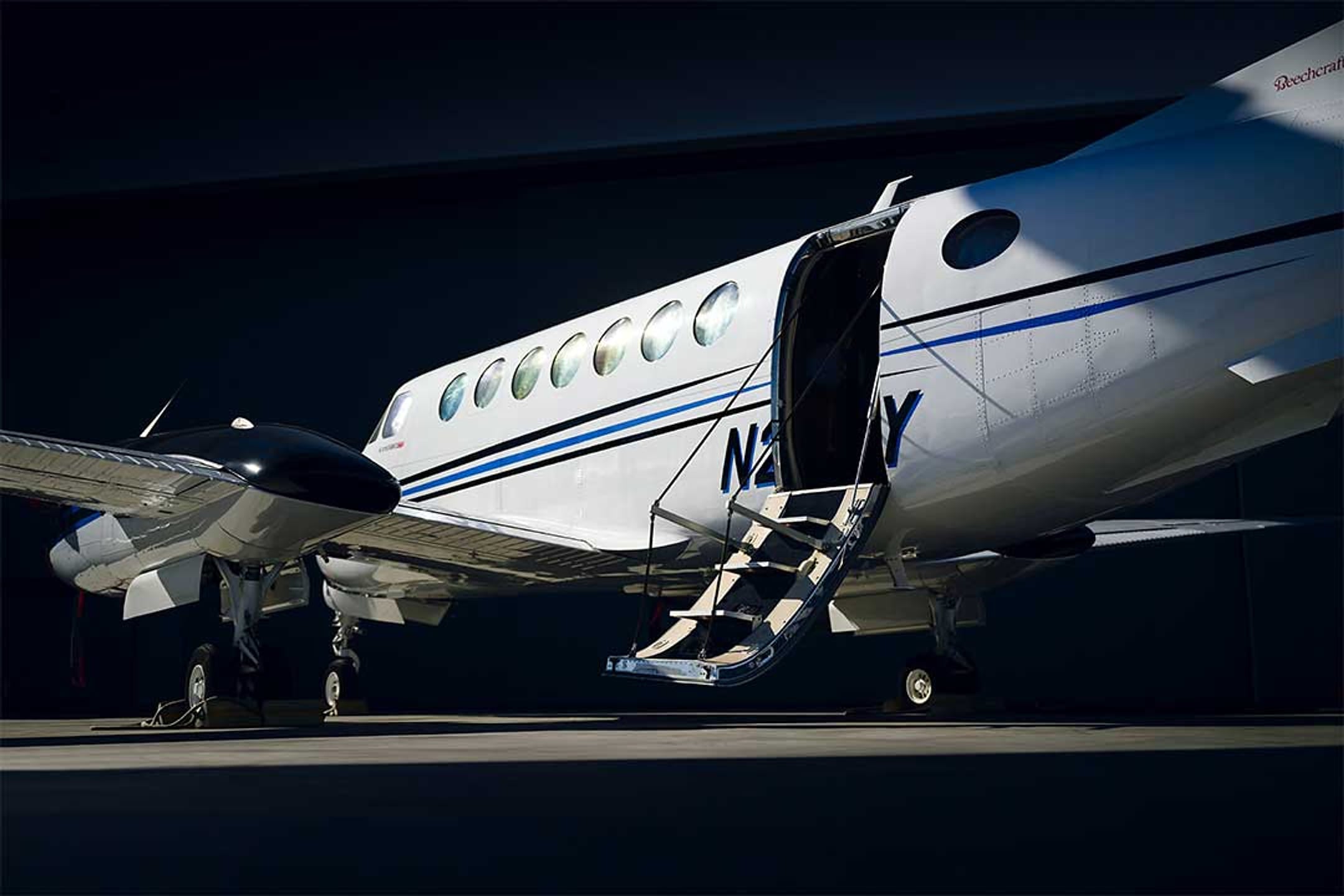
The 350's cabin is nineteen and a half feet long, stands four foot nine, and is fully pressurized with a genuinely enclosed lavatory. Those are dimensions that embarrass a good number of light jets. Nine seats, nine bags, and eight oversized items — skis, clubs, gear — go with you rather than being negotiated over.
And it is honest about weather
Twin PT6A turbines, known ice protection and a platform with sixty years of accumulated operating knowledge behind it make the 350 a genuinely all-weather airplane in terrain that punishes optimism. It is trusted by corporate flight departments and government operators for exactly that reason.
None of which is an argument against jets. It is an argument for matching the aircraft to the mission, which is the conversation we would rather have with you than one about badges.